Why Social-Service Budgets Are Increasing but Funding Alone May Not Solve Delivery Problems
Governments are directing large sums toward social protection as households continue to need food support, pensions, crisis assistance, housing programs, and livelihood services. The proposed Philippine national budget for 2027 allocates ₱2.456 trillion to the broader social-services sector, covering areas such as education, health, employment, housing, and social protection, based on figures from the Department of Budget and Management (DBM).
The Department of Social Welfare and Development (DSWD) presented a proposed ₱241.2-billion budget for 2027 to the House Committee on Appropriations. Major programs include cash transfers, anti-hunger initiatives, disaster response, and emergency assistance. These allocations show the scale of government spending required to serve millions of households, but the size of a budget does not by itself determine how effectively assistance reaches them.
More Money Can Expand Access, but Delivery Still Matters
One example is Assistance to Individuals in Crisis Situations, or AICS. The DBM proposed ₱33.285 billion for the program in the 2027 National Expenditure Program. That is 23.15% above the ₱27.028 billion proposed by the executive branch at the same stage of the 2026 budget process. The 2027 proposal is intended to support millions of people facing emergencies such as illness, loss of income, food insecurity, and funeral expenses.
Funding creates room for more assistance. Yet agencies still need systems capable of processing applications, checking eligibility, releasing benefits, answering complaints, and monitoring results. Weakness at any of these stages can slow the flow of public money to its intended recipients.
Why Frontline Staffing Is Part of the Financing Equation
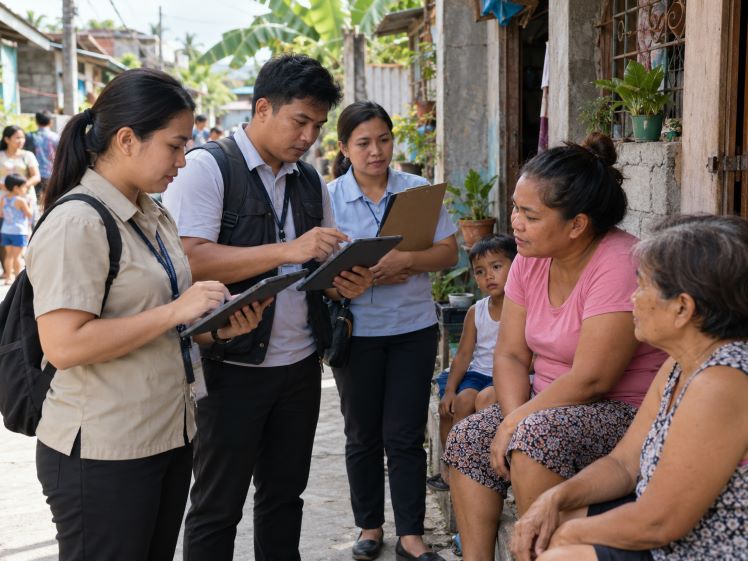
Social programs depend heavily on people. Case workers and regional personnel identify households, verify information, manage records, coordinate with communities, and respond when beneficiaries encounter problems.
The DBM recently approved 5,711 regular DSWD positions, including 5,703 connected with the Pantawid Pamilyang Pilipino Program. It also reported the creation or conversion of more than 21,000 contractual positions. The move illustrates why workforce planning needs to accompany larger program budgets.
A program may have enough money for benefits while still struggling if too few employees must handle large caseloads. Stable staffing can also preserve institutional knowledge and reduce disruption when experienced temporary workers leave.
What Changes When Delivery Systems Improve?
Digital payment and information systems can make distribution faster and easier to track. They can also reduce paperwork. However, technology still depends on accurate beneficiary records, reliable connectivity, accessible payment channels, and safeguards for people who have limited digital access.
Local governments are equally important because many national programs are delivered through regional and community networks. Clear coordination can help agencies identify needs, prevent duplication, and respond when families move or their circumstances change.
From Spending More to Measuring Better
Social-service financing ultimately needs to connect appropriations with outcomes. Agencies can measure whether assistance reaches eligible households, how quickly benefits are delivered, whether errors are corrected, and whether programs improve food security, resilience, employment, or other intended results.
Larger budgets remain important because services cannot expand without resources. But effective social protection requires money, capable staff, reliable technology, local coordination, and meaningful measurement working together. The stronger those links become, the more likely additional public spending is to translate into better services rather than simply larger appropriations.